
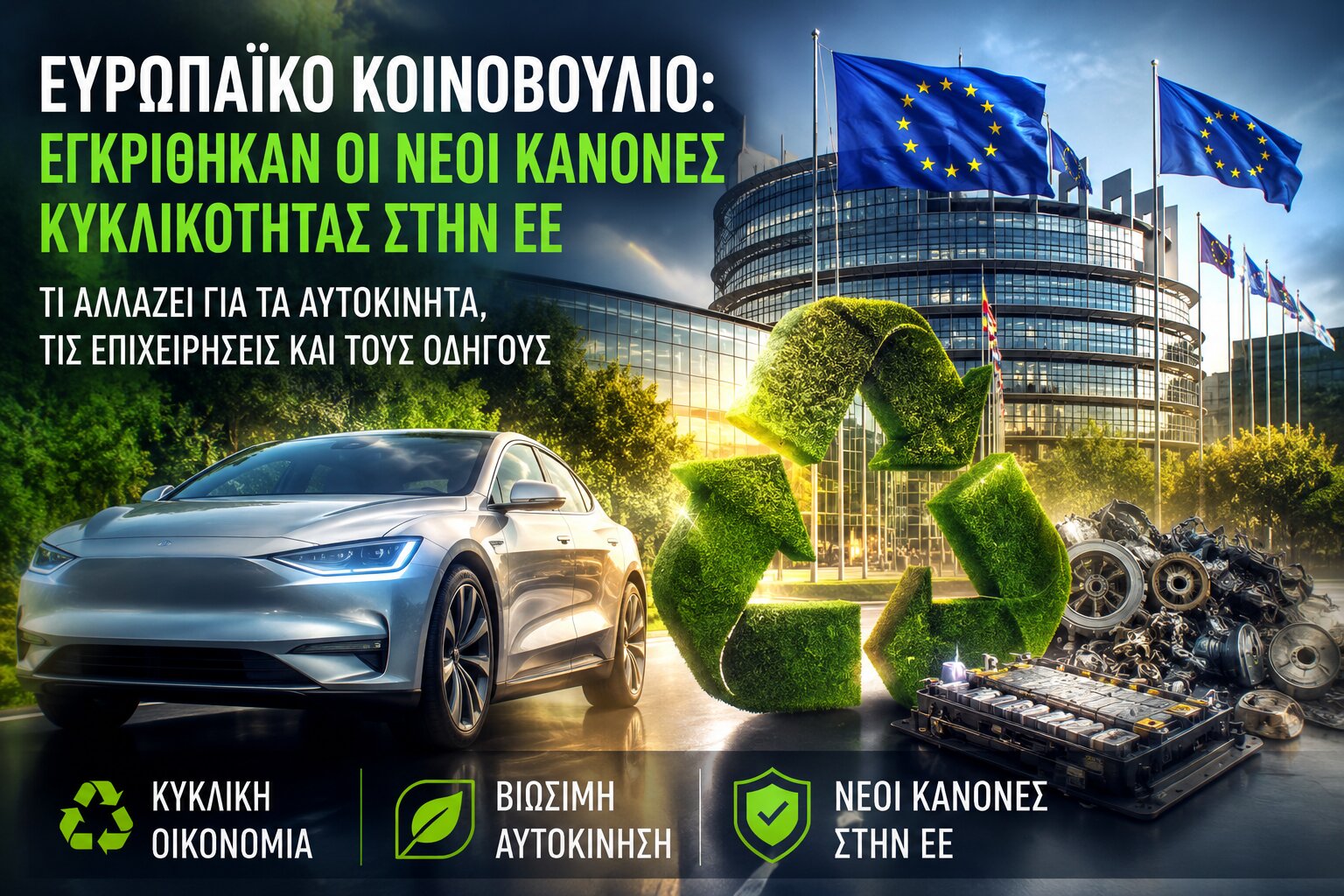
Europe Is Redesigning the Future of Cars
On 18 June 2026, the European Parliament approved a new set of circularity rules for vehicles that will transform the entire lifecycle of a car – from its design and production to its recycling and final disposal.
The legislation was approved with 437 votes in favour, 112 against and 20 abstentions, marking one of the most significant reforms for the European automotive industry in recent decades.
The objective is clear: cars will no longer be considered disposable products but valuable resources whose materials can be reused for decades.
This initiative is part of the European Union’s broader strategy to build a more sustainable, competitive and resource-independent economy.
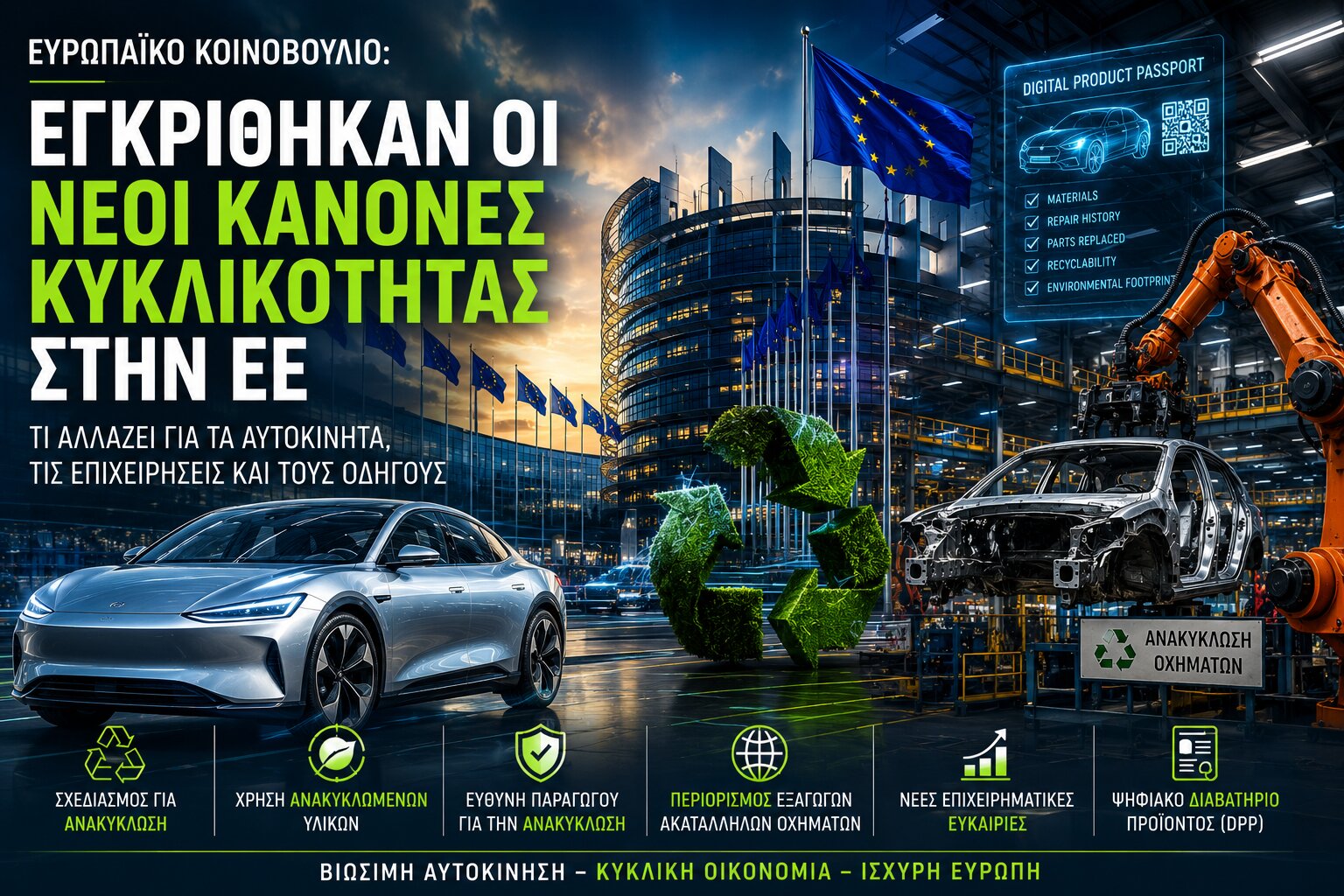
Why Is the EU Introducing These Changes?
Today, across the European Union:
- approximately 286 million vehicles are on the road
- around 6.5 million vehicles reach the end of their lifecycle every year
- the automotive sector supports more than 13 million jobs
At the same time, Europe remains heavily dependent on imported raw materials such as:
- lithium
- nickel
- cobalt
- magnesium
- aluminium
- steel
The new legislation aims to reduce this dependency and strengthen Europe’s industrial resilience.
The rapid growth of electric vehicles has also increased the demand for critical materials, making recycling a strategic priority rather than simply an environmental objective.
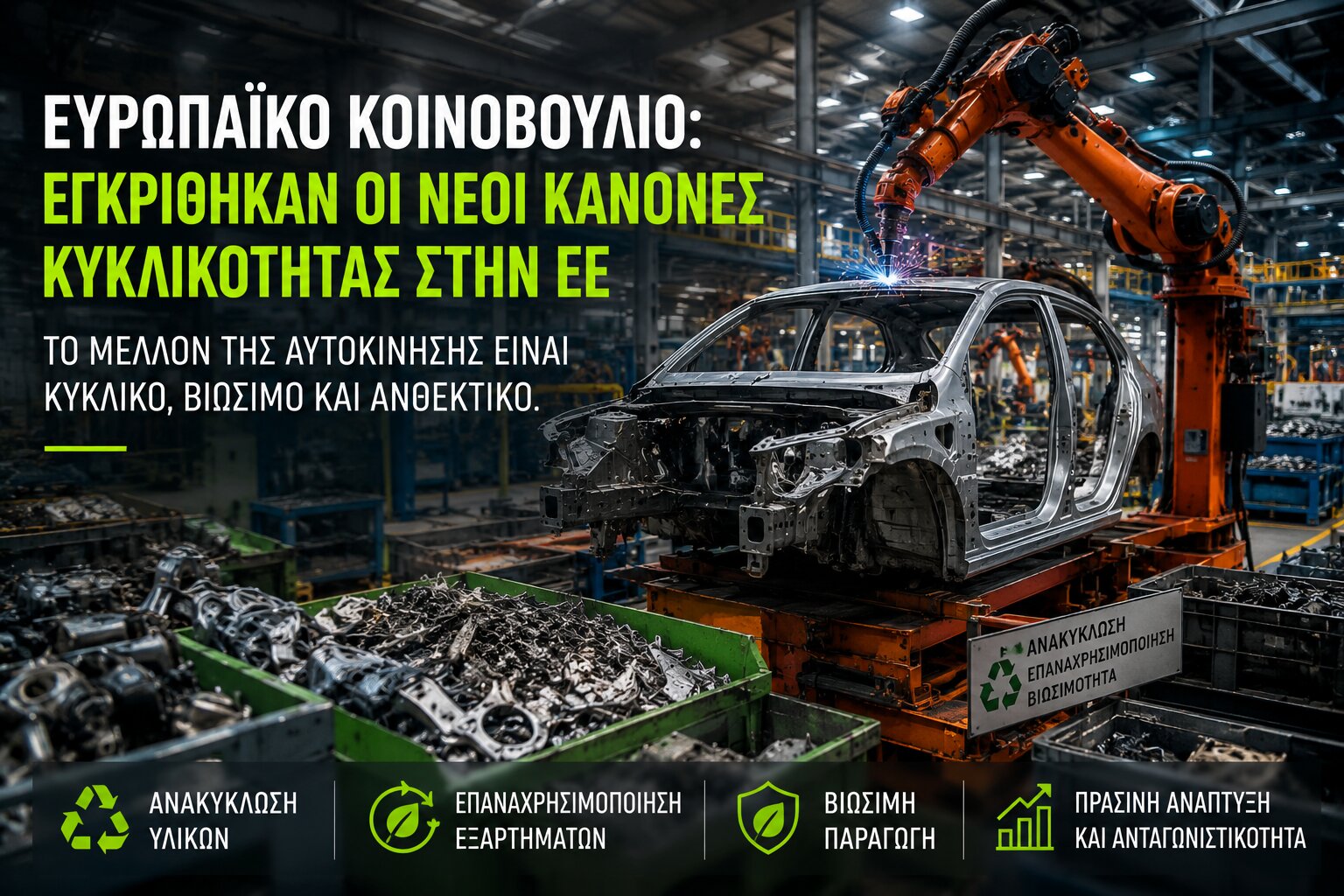
The 5 Most Important Changes Introduced by the New Rules
1. Cars Will Be Designed for Recycling
Manufacturers will be required to build vehicles that are:
- easier to dismantle
- easier to repair
- designed for component reuse
- built to last longer
The goal is to make vehicle circularity part of the design process from the very beginning.
2. Mandatory Use of Recycled Plastics
The EU has introduced specific targets:
- 15% recycled plastic within six years
- 25% recycled plastic within ten years
Part of this material must come directly from end-of-life vehicles.
This will help create a closed-loop recycling system within the automotive sector.
3. Manufacturers Will Pay for Vehicle Recycling
The legislation introduces the principle of Extended Producer Responsibility (EPR).
Vehicle manufacturers will be financially responsible for:
- vehicle collection
- transportation
- treatment
- recycling processes
The objective is to ensure that companies take responsibility for the entire lifecycle of their products.
4. Restrictions on Exporting End-of-Life Vehicles
The EU will impose stricter controls on exporting unsafe or non-functional vehicles to non-EU countries.
The measure aims to stop Europe from transferring environmental problems abroad and ensure proper recycling standards are maintained.
5. Every Vehicle Will Have a Digital Product Passport
The Digital Product Passport (DPP) will gradually become a key element of the new system.
It will record:
- materials used in production
- repair history
- replacement parts
- recyclability information
- environmental footprint
This will improve transparency across the automotive supply chain.
What Does This Mean for Greece?
Greece has one of the oldest vehicle fleets in Europe, creating significant opportunities for several sectors.
The biggest beneficiaries could include:
- recycling companies
- independent workshops
- spare parts businesses
- fleet management companies
- car rental companies
Consumers may also benefit from:
- longer vehicle lifespans
- increased availability of spare parts
- lower repair costs
- greater transparency in the used-car market
Why Is This More Than an Environmental Policy?
This reform is also about economic security and industrial competitiveness.
Europe wants to reduce its dependence on global suppliers and build its own sustainable supply chains.
By treating old vehicles as valuable sources of raw materials, the EU hopes to strengthen its position in the global transition towards electric mobility.
Conclusion
The European Parliament’s decision represents one of the most important reforms for the European automotive industry in the last decade.
Europe is not simply changing recycling rules; it is redesigning the entire lifecycle of vehicles.
The future of mobility will no longer be defined solely by whether a car is electric, but also by how easily it can be repaired, reused and recycled.
The message from Europe is clear:
The era of “produce, use and discard” is coming to an end. The era of circular mobility has officially begun.